
What are radiation suits and why are they essential in hazardous environments?
Radiation suits are personal protective equipment designed to reduce as much as possible the exposure of the human body to hazardous substances present in certain industrial, health, military or emergency environments. This type of equipment is part of the most advanced safety systems currently used in operations where there is a chemical, biological or radiological risk.
Although these suits are popularly thought of as “radiation blocking”, the reality is more complex. In most situations, their main function is to prevent contamination by radioactive particles, preventing hazardous substances from coming into contact with skin, clothing or the respiratory tract. This is particularly important in nuclear accidents, industrial leaks or interventions in contaminated areas.
In addition to protecting against radiological contamination, many suits are prepared to protect against toxic chemicals, hazardous gases, corrosive liquids and biological threats such as bacteria, viruses or spores. For this reason, NBC protection systems have become an indispensable tool in both the military and specialized civilian sectors.
Depending on the level of risk involved, suits may incorporate different levels of sealing, filtration and insulation. Some models are designed only to prevent the entry of particles, while others offer integral airtight protection with positive pressure and self-contained breathing systems. In the most extreme scenarios, advanced equipment such as the military NBC suit, considered one of the most complete protection systems in the world, is used.

What is a military NBC suit and what is its function?
The military NBC suit is a specialized protection system designed to enable safe operations in nuclear, biological and chemical threat scenarios. The acronym NBC refers precisely to these types of risks: nuclear, biological and chemical.
Unlike conventional protective equipment used in industry or laboratories, the military NBC suit is developed to withstand extreme situations where there is a high concentration of hazardous contaminants and where operational mobility is critical. These systems are used by armed forces, tactical units, decontamination teams and specialized emergency corps that must intervene in potentially lethal environments.
Comprehensive protection against chemical, biological and nuclear threats
The main purpose of the suit is to prevent toxic agents from coming into contact with the body. To this end, the system protects both the skin and the respiratory system through a combination of impermeable materials, advanced filters and specialized breathing apparatus. Thanks to this comprehensive protection, users can operate in contaminated areas while minimizing the risk of poisoning or contamination.
Originally, this equipment was designed exclusively for military use in chemical warfare or nuclear threat scenarios. However, over time, their use has spread to numerous civilian areas. Today, NBC suits are also used by specialized firefighters, civil protection units, chemical intervention teams, petrochemical plants, power plants and high-security healthcare teams.
Military NBC suit applications in critical situations
In industrial accidents, chemical spills or radiological incidents, the use of a military NBC suit can make the difference between a safe intervention and a critical exposure. Their ability to offer advanced protection while maintaining a certain level of mobility makes these suits an essential part of any NBC protocol.
Main components of a military NBC suit
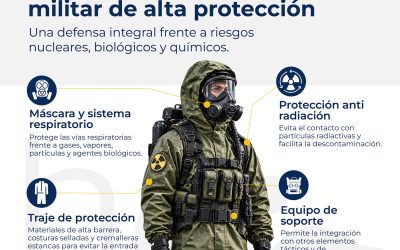
One of the most important things to understand is that a military NBC suit is not just a protective coverall. In reality, it is a complete system made up of different elements designed to work together to provide comprehensive protection against complex threats.
The head is usually protected by a specialized hood or helmet that prevents the entry of contaminating particles and protects extremely sensitive areas such as the neck, face and upper respiratory tract. In many models, this protection is directly integrated with the face mask to ensure an airtight seal.
The NBC mask is probably the most critical component of the entire system. Its function is to prevent the inhalation of toxic gases, contaminated aerosols or dangerous particles. These masks incorporate impact-resistant panoramic visors and high-precision sealing systems that allow them to remain airtight even during intense movements or long interventions.
NBC filters represent another essential element. They are designed to remove radioactive particles, chemical gases and toxic vapors before the air reaches the respiratory system. They are typically manufactured with activated carbon and state-of-the-art filter media capable of neutralizing a wide variety of contaminants. Depending on the threat, filters can be replaced by specific models adapted to different hazards.
The main coverall of the suit constitutes the physical barrier against contaminants. It is manufactured using multilayer polymers, special fabrics with activated carbon and waterproof materials that are highly resistant to aggressive chemicals. Some models are completely watertight, offering maximum protection, while others prioritize mobility and ventilation through advanced filtering systems.
The system is completed with sealed chemical gloves and special boots resistant to corrosive substances and hazardous surfaces. These components must be seamlessly integrated with the suit to avoid any vulnerable points where leaks may occur.
In the most advanced equipment, the suit also incorporates ventilation or positive pressure systems. This mechanism introduces clean air into the interior of the equipment generating a higher pressure than the outside, thus preventing the entry of contaminants even if there is a small leak in the system.

How radiation and NBC suits work
Physical barrier: the first line of protection
The operation of radiation suits and NBC systems is based on a combination of technologies designed to isolate the wearer from any hazardous agents present in the environment.
The first principle is the physical barrier. The suit acts as an insulating layer that prevents contaminating particles from coming into contact with skin or clothing. This protection is essential in environments with radioactive dust, chemical liquids or biological aerosols.
Advanced filtration of hazardous gases and particles
The second key element is filtration. Respiratory systems incorporate specialized filters capable of removing toxic gases, microscopic particles and chemical vapors before they are inhaled. This part of the system is especially important because many NBC threats directly affect the body through the respiratory tract.
Positive pressure systems in high-risk environments
In more advanced models, a third principle is added: positive pressure. Clean air pumped into the suit generates an internal pressure higher than that of the external environment. This means that, even if there is a small opening or microleak, the air flows out instead of allowing contaminants to enter. This system is common in military operations, high-security laboratories and high threat scenarios.
Limitations of radiation suits
It is important to note that radiation suits do not completely eliminate all risks. Intense ionizing radiation, for example, requires specific shielding made of materials such as lead, concrete or specialized compounds. Therefore, these suits are primarily aimed at avoiding contamination and reducing indirect exposure.
Differences between civilian and industrial suits and military NBC suits
Although there are numerous types of protective suits, not all offer the same level of safety. The differences between a conventional industrial suit and a military NBC suit are very significant in terms of both materials and performance.
Industrial suits are usually designed for specific, controlled hazards. For example, some models protect only against liquid chemicals, while others are prepared for biological particles or dust contaminants. Generally, these suits seek a balance between protection, comfort and operating cost.
In contrast, the military NBC suit is designed for extreme and unpredictable situations. It must offer simultaneous protection against nuclear, chemical and biological threats, while allowing the wearer to maintain tactical capability, mobility and physical endurance during the operation.
Another major difference is durability. Military suits are built to withstand much more aggressive conditions, including extreme temperatures, abrasion, intense movement and prolonged use. In addition, many models allow integration with communication systems, weaponry, self-contained breathing and tactical equipment.
While civilian equipment tends to prioritize ergonomics and lightness, the military suit prioritizes survival and operational safety in scenarios where the margin of error is minimal.
Standards and protection levels for NBC suits
The manufacture and certification of anti-radiation suits and NBC equipment is regulated by very strict international standards. These certifications guarantee that the equipment has been subjected to real resistance, watertightness and efficiency tests.
Among the most important European standards is EN 943, related to gas-tight suits against hazardous gases. Also particularly relevant is EN 14605, focused on protection against chemical liquids, as well as EN 14126 for biological protection and EN 1073 for radioactive contamination.
In addition to the regulations, the suits are classified by protection levels. Type 1 suits offer maximum gas-tightness and are used in high-risk operations. Types 2 and 3 are designed for pressurized chemical liquids, while Types 4, 5 and 6 offer more limited protection against splashes and particles.
Selecting the right level is critical. Insufficient equipment can jeopardize the entire operation, while an oversized system can hinder mobility and increase user fatigue.
Actual applications of NBC and anti-radiation suits
Radiation suits have much wider applications than many people realize. Although traditionally associated with the military, they are now an essential part of many critical sectors.
In the military environment, NBC suits are used in reconnaissance operations, chemical weapons defense and missions in potentially contaminated areas. Armed forces need equipment that can perform even under extreme threats while maintaining operational capability.
In civil emergencies, these systems are indispensable during nuclear accidents, toxic leaks, chemical spills or biological incidents. Civil protection teams, specialized firefighters and HAZMAT units depend on this equipment to intervene safely.
The chemical and petrochemical industry also frequently uses this type of protection. Refineries, chemical plants and hazardous waste management centers work with highly toxic substances where any exposure can have serious consequences.
In the healthcare and scientific fields, NBC suits are common in advanced biosafety laboratories and research centers where dangerous pathogens or contaminating materials are handled.
Tips for choosing a suitable protective suit
Choosing the right NBC protection system is a critical decision that must be based on a professional assessment of the risk involved. Not all environments require the same level of protection, and using the wrong equipment can seriously compromise safety.
The first aspect to be analyzed is the type of threat present. Working with chemical gases is not the same as working in an area with radioactive particles or biological agents. Each risk requires specific materials, filters and sealing levels.
It is also essential to assess the expected duration of the procedure. The longer the user remains inside the suit, the greater the thermal and physical fatigue. Ergonomics and ventilation are therefore very important factors.
Compatibility with other systems is also key. The suit must integrate well with respiratory masks, self-contained breathing apparatus, communication systems and other operational devices.
In addition, it is always recommended to choose equipment certified according to official standards and to seek expert advice before making any purchase or operational implementation.
FAQ – Frequently asked questions about radiation suits
Not necessarily. Most radiation suits are designed to prevent contamination by radioactive particles, but they cannot completely stop certain types of intense ionizing radiation. Specific materials such as lead or other specialized shielding systems are required to block high-energy radiation.
The time of use depends on the model, the level of physical exertion, the temperature and the respiratory system used. In some cases they can be used for several hours, although thermal fatigue and air supply usually limit the operating time.
Yes, the military NBC suit is specifically designed to provide protection against chemical threats, including toxic gases, hazardous vapors and corrosive agents. To achieve this, it combines waterproof materials, hermetic sealing systems and specialized filters capable of neutralizing many hazardous substances before they come into contact with the body or are inhaled.
Some models can be reused, provided they undergo strict decontamination, technical inspection and filter replacement processes. However, in critical or highly contaminated situations, many units opt for disposable or limited-use equipment.
Although they may look similar, they do not perform exactly the same function. Chemical suits are primarily intended to protect against corrosive liquids, toxic gases or hazardous industrial substances. Radiation suits, on the other hand, are designed to prevent contamination by radioactive particles and, in many cases, also incorporate biological and chemical protection. Advanced NBC models combine several levels of protection in a single system.
It depends on the level of risk and the type of contaminant present in the environment. In highly toxic situations or when there is a lack of oxygen, it is essential to use self-contained breathing apparatus (SCBA). In other less critical scenarios, some NBC systems work with interchangeable filters connected to high protection face masks.
Not all of them. Some industrial models offer only chemical or biological protection and are not prepared for high temperatures. However, certain advanced systems, especially some military NBC suit models, incorporate flame-retardant and heat-resistant materials for tactical operations or interventions in industrial fires and complex accidents.
Decontamination depends on the agent to which the equipment has been exposed. Specific protocols are generally used that include chemical washing, neutralization of contaminants and complete system checks. After each use, it is essential to inspect seams, zippers, filters and sealing areas to ensure that the suit maintains its protective capability.
A puncture or leak can completely compromise user safety, especially in environments with toxic agents or particulate contaminants. For this reason, NBC equipment includes very strict inspection and maintenance systems. In high-risk operations, any damage usually involves immediate removal of the suit and the application of decontamination and emergency protocols.
Yes, manufacturers develop different sizes and configurations to suit the physical build and type of operation. Proper fit is essential to ensure mobility, comfort and proper sealing of the system. A suit that is too loose or too tight can reduce the effectiveness of the protection.
Filter life depends on multiple factors, such as the type of contaminant, ambient concentration and intensity of use. Some filters can operate for several hours, while others require replacement much sooner. In any case, it is essential to follow the manufacturer’s recommendations and perform periodic checks to ensure proper operation.
The importance of professional NBC protection
Anti-radiation suits and especially the military NBC suit currently represent the most advanced level of protection against chemical, biological and nuclear threats. Their technological development allows them to operate in extremely dangerous environments where any failure could have serious consequences.
Beyond the military, this equipment has become an indispensable tool for critical industries, emergency teams and specialized organizations that work with hazardous materials on a daily basis.
Certified, reliable solutions adapted to the actual level of risk are essential to ensure the safety of operators and the success of any intervention. In this context, expert advice and professional quality equipment make a decisive difference between limited protection and truly effective safety.