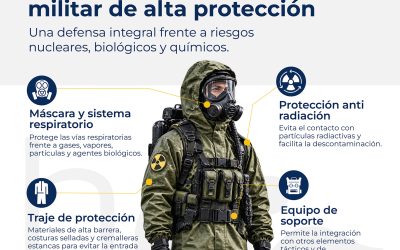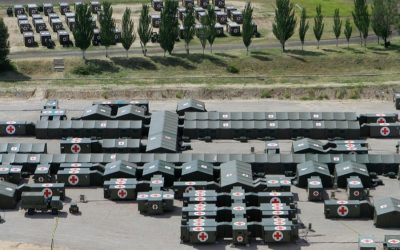
Hispano Vema participated in the 3rd edition of the EU CBRN CoE Academy, held June 8–12, 2026, at the United Nations Campus in Turin, Italy. The event brought together more than 250 experts from 70 countries to address the main challenges related to prevention, preparedness, and response to biological risks and CBRN (chemical, biological, radiological, and nuclear) threats.
Organized by the European Commission and the United Nations Interregional Crime and Justice Research Institute (UNICRI), the academy is one of the flagship events of the European Union’s Centers of Excellence Initiative for CBRN Risk Mitigation (EU CBRN CoE).
In an international context marked by evolving threats and the need to strengthen response capabilities for biological risks, the EU CBRN CoE Academy 2026 focused on international cooperation, technological innovation, and preparedness for scenarios that may involve biological risks, chemical agents, hazardous substances, and nuclear risks.
The Role of Industry in Addressing Biological and CBRN Risks
One of the main new features of this edition was the inclusion of a specific program dedicated to the private sector and academia. This program highlighted the role of industry in developing technologies and capabilities aimed at improving preparedness and response to CBRN incidents.
Biological risks are one of the major challenges in this field, along with threats posed by chemical, radiological, and nuclear agents. Adequate preparedness requires a combination of specialized knowledge, interagency coordination, and technological solutions capable of responding effectively to emergency situations.
As one of the world’s leading manufacturers of CBRN decontamination systems, Hispano Vema actively participated in this international forum alongside government authorities, civil protection organizations, armed forces, and technology centers.
During the conference, the company shared its expertise in developing operational decontamination capabilities and in addressing the challenges associated with today’s increasingly complex and diverse CBRN scenarios.

Technology for Responding to Chemical Agents and Hazardous Substances
As part of the EU CBRN CoE Academy 2026, a Technology Fair was also held, at which more than 30 companies and public agencies presented advanced solutions for detection, identification, monitoring, decontamination, and emergency response.
The trade show provided an opportunity to showcase technologies designed to improve the response to various scenarios, ranging from exposure to chemical agents and hazardous substances to situations involving biological, radiological, or nuclear hazards.
In this context, decontamination capabilities play a critical role. A rapid and effective response helps reduce the impact of chemical, biological, or radiological contamination and protects both emergency response teams and the affected population and infrastructure.
The event also facilitated direct interaction among end users, public agencies, and specialized companies, helping to tailor technological innovation to the actual needs of operational units.

International Cooperation for Risk Mitigation
The international dimension was one of the key features of the EU CBRN CoE Academy. The event brought together representatives from the initiative’s eight Regional Secretariats and the National Focal Points of the 63 partner countries.
This broad participation reflects the importance of international cooperation in addressing transnational risks and improving national and regional capacities for prevention, preparedness, and response.
The initiative’s programs are coordinated through various regional networks in Europe, Africa, the Middle East, Central Asia, and Southeast Asia:
- African Atlantic Facade (AAF): Benin, Cameroon, Côte d’Ivoire, Gabon, Liberia, Mauritania, Morocco, Nigeria, Senegal, Sierra Leone, and Togo.
- Central Asia (CA): Kazakhstan, Kyrgyzstan, Mongolia, Pakistan, Tajikistan, and Uzbekistan.
- Eastern and Central Africa (ECA): Burundi, Democratic Republic of the Congo, Ethiopia, Ghana, Kenya, Malawi, Rwanda, Seychelles, Tanzania, Uganda, and Zambia.
- Gulf Cooperation Council (GCC): Bahrain, Kuwait, Oman, Qatar, Saudi Arabia, and the United Arab Emirates.
- Middle East (MIE): Iraq, Jordan, and Lebanon.
- North Africa and the Sahel (NAS): Algeria, Burkina Faso, Libya, Mali, Morocco, Niger, and Tunisia.
- Southeast Asia (SEA): Brunei, Cambodia, Indonesia, Laos, Malaysia, Myanmar, the Philippines, Singapore, Thailand, and Vietnam.
- Southeast and Eastern Europe (SEEE): Albania, Armenia, Azerbaijan, Bosnia and Herzegovina, Georgia, Moldova, Montenegro, North Macedonia, Serbia, and Ukraine.
Collaboration among governments, international organizations, research centers, and specialized companies is essential for developing shared capabilities to address CBRN threats and strengthening global resilience.

Technological Innovation in the Face of New Threats
During the workshop, the impact of emerging technologies on CBRN security was also analyzed. Artificial intelligence, advanced biotechnology, autonomous systems, and new detection technologies are transforming the capabilities available for identifying and responding to various risk scenarios.
These tools offer new possibilities for improving the detection of chemical agents, the identification of biological threats, and the monitoring of potential sources of contamination. They also make it possible to strengthen preparedness for more complex scenarios involving nuclear and radiological risks.
The program also included live demonstrations of some of rescEU’s latest systems, including mobile laboratories, specialized monitoring vehicles, robotic platforms, and immersive virtual training solutions.
The combination of these technologies with specialized operational capabilities enables progress toward faster, more coordinated, and more effective response models for CBRN emergencies.

Hispano Vema, Committed to CBRN Preparedness and Response
Rafael Arruga, Director of Business Development at Hispano Vema, highlighted the strategic value of the company’s participation in the event:
“The EU CBRN CoE Academy provides us with a unique opportunity to strengthen ties with international organizations, governments, and the scientific community, while gaining firsthand insight into the operational needs of both military and civilian CBRN units. This ongoing exchange allows us to continue developing innovative decontamination solutions that improve preparedness, resilience, and operational effectiveness around the world.”
In the face of an ever-evolving threat landscape, cooperation among governments, operational users, the scientific community, and the private sector is essential to transforming technological innovation into actual response capabilities.
Preparedness for biological hazards, chemical agents, hazardous substances, chemical contamination, and other CBRN scenarios requires specialized solutions that protect people and ensure business continuity.
Through its participation in the EU CBRN CoE Academy 2026, Hispano Vema reaffirms its commitment to innovation and the development of decontamination systems capable of contributing to a more effective global response to CBRN threats.